Have you ever quit your old job after receiving an offer letter, only to find out later that the company wasn’t ready with the appointment letter? Or maybe you’ve seen colleagues caught in the same trap. The benefits in their offer letter looked exciting. But when the appointment letter arrived, the terms felt very different.
These stories aren’t rare. They happen more often than most people think. And they raise a simple question:
Are offer letters and appointment letters the same, or not?
At first glance, they may look similar, but they are very different, both legally and practically. Misunderstanding these differences can lead to disputes, mistrust, and even legal battles, especially for employees, HR managers, and employers.
This article breaks down the offer letter vs appointment letter debate in simple terms, so you know how each works, why the difference matters, and how to avoid common pitfalls.
What is an offer letter?
The offer letter is the employer’s intent to hire. Think of it as the company saying, “We’d like you to join us.”
It usually includes:
• Job title
• Tentative joining date
• Location of posting
• Compensation structure
However, in most cases, the offer letter is not a binding employment contract, unless it specifically mentions legal obligations like notice periods or non-compete clauses.
👉 Example: If a candidate resigns from their previous job after receiving a signed offer letter, but the company later cancels the offer without a valid reason, the candidate may have a case for damages. This highlights the importance of drafting offer letters carefully.
When can an offer letter become binding?
Normally, it doesn’t. But an offer letter can become enforceable if:
• It includes clear binding clauses (like notice period, confidentiality, or non-compete).
• It explicitly states that acceptance creates a contractual obligation.
These cases have been recognised in Indian courts, which is why legal experts stress the importance of drafting offer letters carefully. Learn more on HR Legal Experts for guidance on HR compliance.
When can an offer letter become binding?
The appointment letter is the formal and legally binding employment contract. Once the candidate has accepted the offer and completed the joining formalities, the appointment letter is issued.
It typically covers:
• Duties and responsibilities
• Working hours and probation period
• Compensation, benefits, and leave policy
• Confidentiality and code of conduct
• Termination provisions
Once both the employer and the employee sign the appointment letter, it becomes legally binding under Indian law.
Structure of appointment letters in India
In India, appointment letters typically follow a standard structure:
• Confirm the employee’s appointment and start date.
• Outline employment terms and conditions.
• Include clauses on arbitration, dispute resolution, and jurisdiction.
👉 Both parties should read the appointment letter thoroughly before signing, as it governs the entire employment relationship.
Offer Letter vs Appointment Letter: The core difference
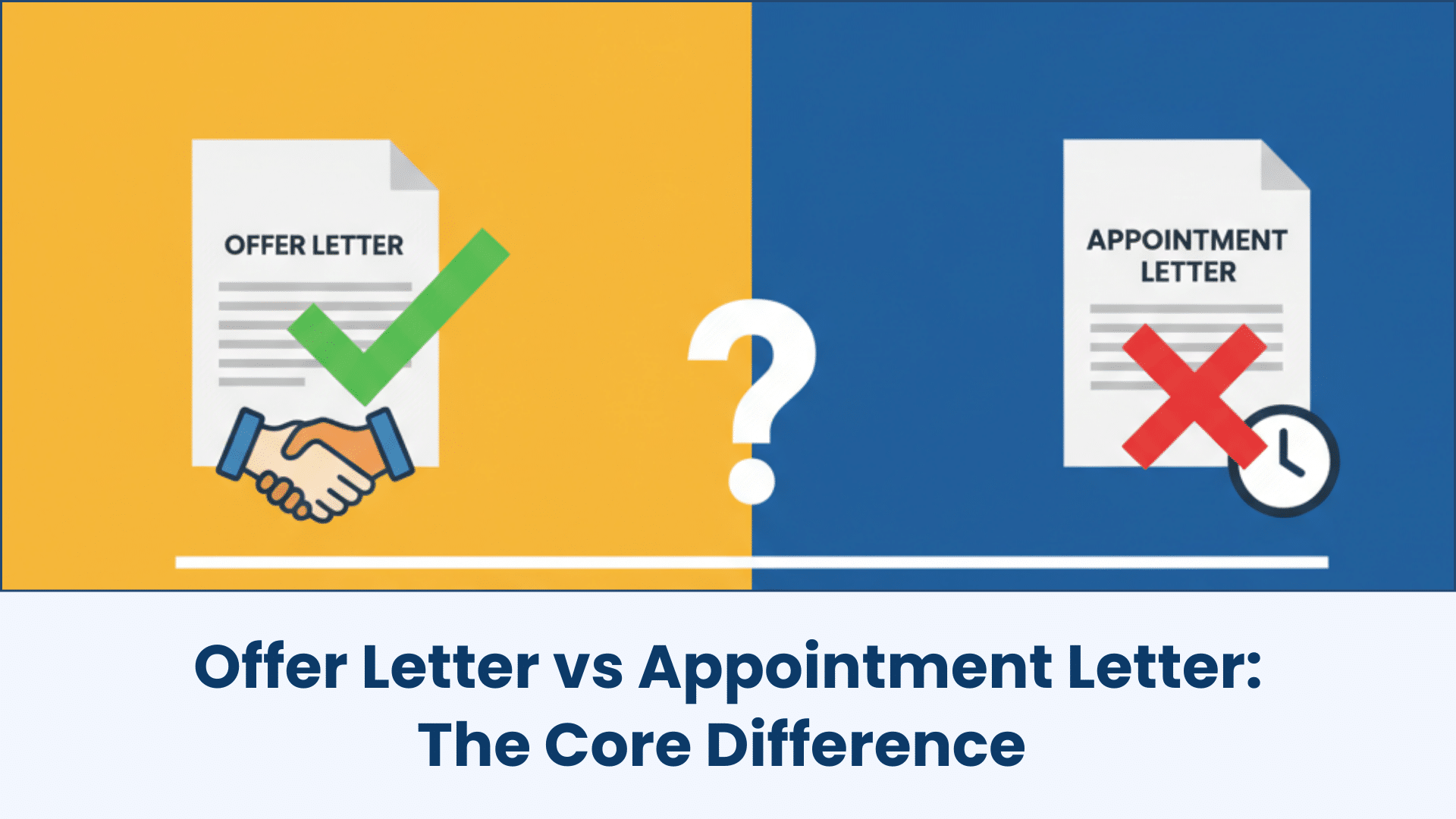
Here’s the simplest way to remember it:
• Offer Letter → Invitation to join, usually non-binding unless clearly worded as binding.
• Appointment Letter → Final, legally binding employment contract.
For employees: You’re not officially employed until you sign the appointment letter.
For employers: Issuing the appointment letter too soon or drafting it poorly could expose you to legal risk.
In India, disputes often arise because of confusion between the two:
• Candidates resigning from old jobs based only on an offer letter.
• Employers withdrawing offers after candidates relied on them.
• Employees demanding benefits that were written in the offer letter but excluded in the appointment letter.
To avoid such conflicts, both sides should:
• Use clear and consistent language.
• Keep communication transparent.
• Always issue a legally sound appointment letter.
Employers seeking clarity can explore professional guidance from Corporate Stalwarts, who specialise in leadership hiring and HR compliance.
Common practice in India
In practice, many companies issue the offer letter first to secure quick acceptance, followed by the appointment letter on or before the joining date.
For senior roles, some companies skip the offer letter and go directly to the appointment letter. While there’s no universal rule, issuing a detailed appointment letter is always best for compliance and risk management.
Conclusion
The offer letter vs appointment letter distinction isn’t just a matter of words, but legal enforceability and expectations.
• Offer Letter: Usually an invitation, it may or may not be binding depending on wording.
• Appointment Letter: The final, binding employment contract that governs rights and duties.
For employees, knowing this difference can save you from unnecessary stress. For employers, it reduces compliance risks and builds trust from day one.
Still confused about how to draft or interpret an offer letter vs appointment letter? Contact HR Legal Experts, we can help you avoid costly mistakes.
👉today for professional guidance.

FAQs on Offer Letter vs Appointment Letter in India
Offer Letter and Appointment Letter Questions
Not always. Most are not binding unless they include clear obligations or specify that acceptance creates a contract.
Yes, but if the candidate resigned from a previous job or suffered losses, the employer could face claims for damages.
Once signed by both employer and employee, the appointment letter is a binding contract under Indian law.
Generally No, because benefits are governed by the appointment letter. But if the offer letter had specific promises and the employee relied on them, disputes may arise.
The offer letter gets quick acceptance, while the appointment letter formalises the contract. Together, they create clarity.

HR Legal Experts is a specialized consulting firm helping businesses stay fully compliant with labour laws and HR policies. With a proven track record of serving 500+ organizations, we deliver customized solutions in POSH compliance, employee handbooks, contracts, and regulatory documentation. Our team combines legal expertise with practical HR insights to ensure risk-free, people-first workplaces.
