
Many organisations begin reviewing their HR policies when they sense that a compliance gap may exist, even if no dispute has occurred yet. This concern often arises because workplace issues develop gradually. An exit becomes difficult to manage, a grievance is raised without a defined process, or an audit highlights inconsistencies in documentation. These situations reveal how the absence of structured HR policies Indian companies depend on can silently create legal and operational risk.
HR policies function as formal instructions that guide decision-making, set expectations, and demonstrate procedural fairness. When policies are outdated or inconsistent with employment laws, employers face challenges such as enforceability issues, varied interpretation, and increased exposure to disputes. This is a frequent issue across Indian organisations, especially as regulations continue to evolve.
With the direction set by the new labour codes, the emphasis on uniformity and transparency has increased. HR policies are now central to workplace compliance. Identifying which HR policies Indian companies require most helps employers create clarity, reduce operational disputes, and maintain legal stability.
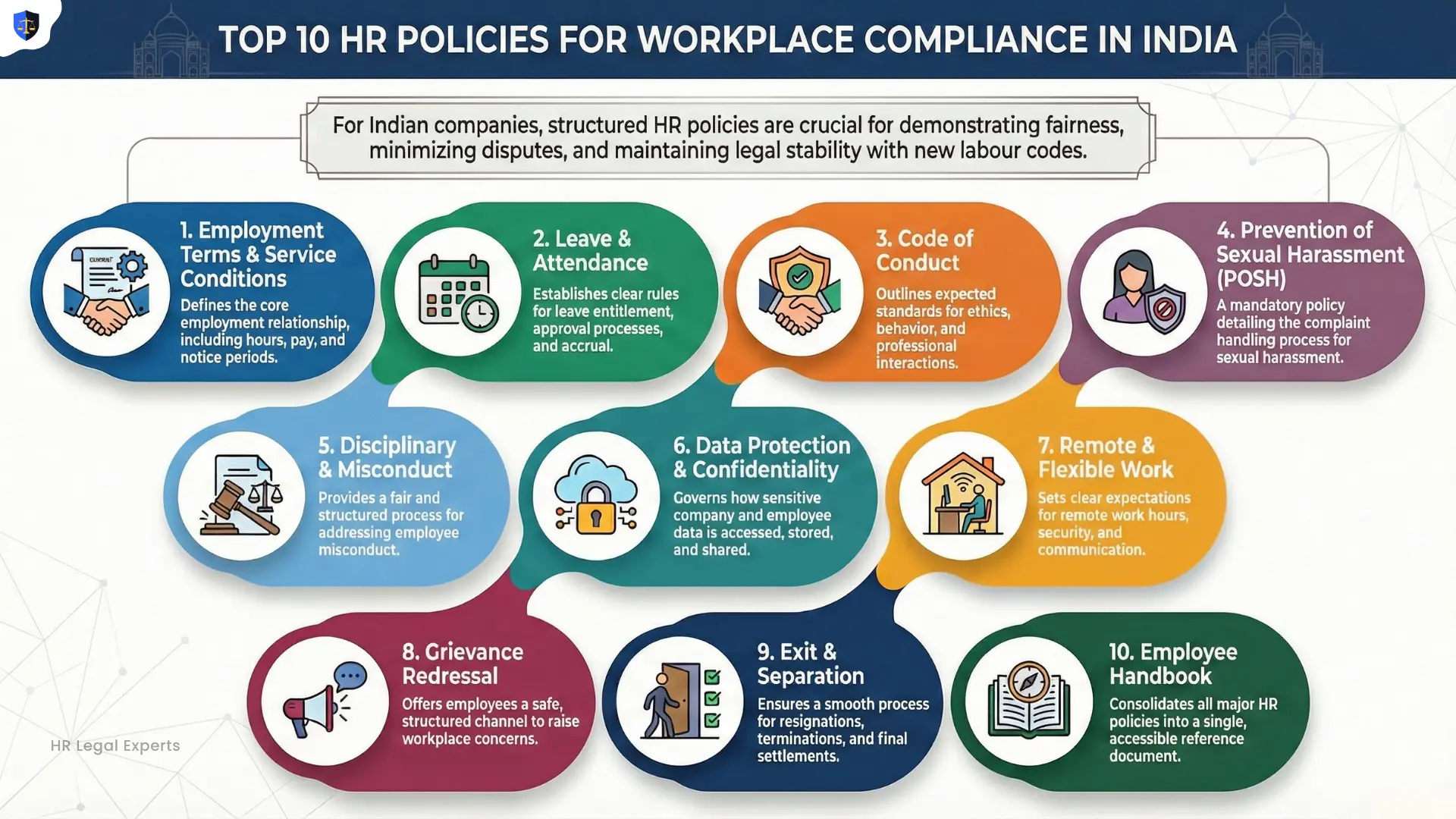
This article outlines the top 10 HR policies Indian companies should prioritise, along with their legal relevance and compliance considerations.
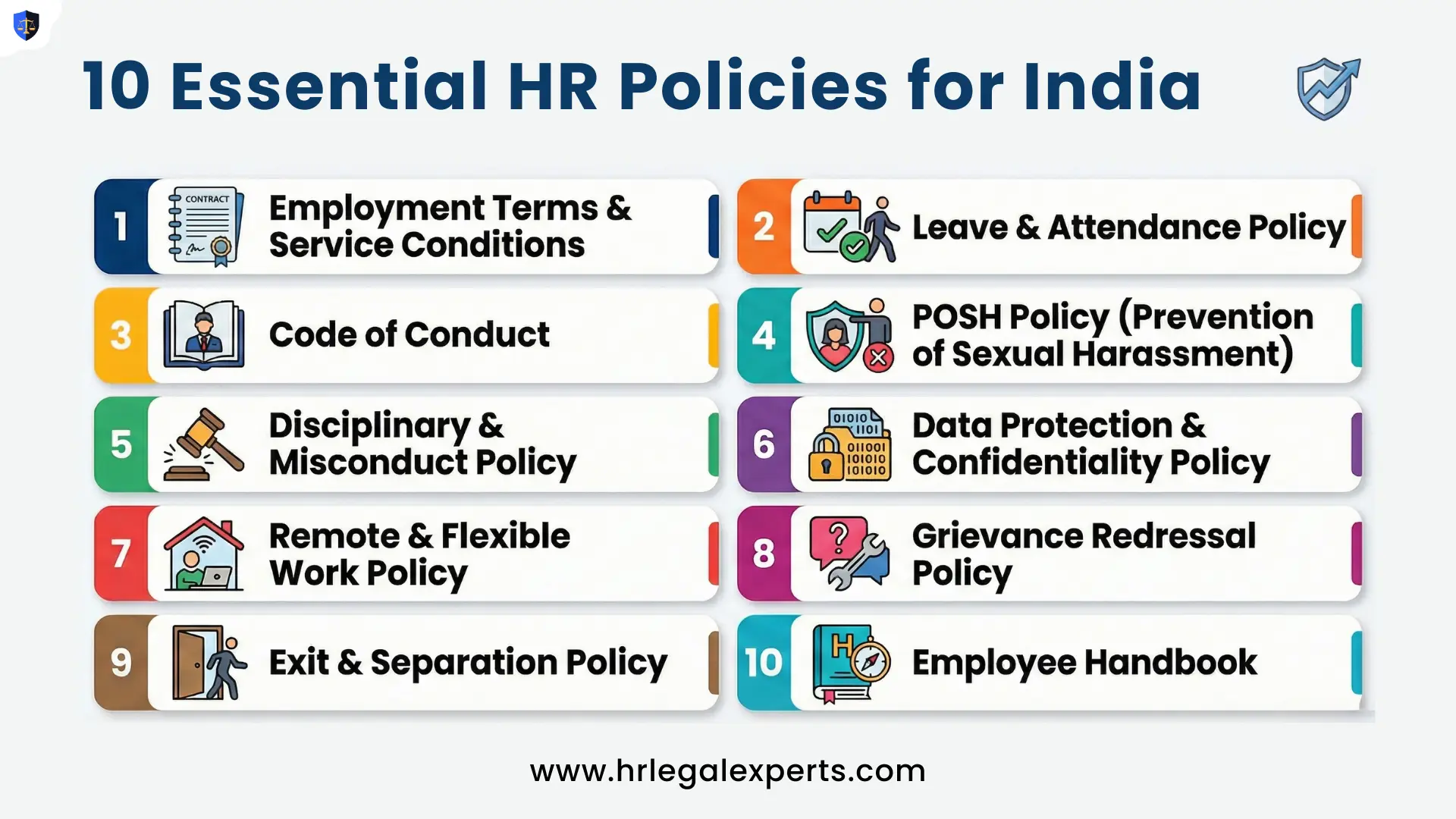
1. Employment terms and service conditions policy
This policy defines the structure of the employment relationship, including working hours, compensation, probation, notice periods, and reporting expectations. It serves as the foundational reference point for most employment-related queries.
A strong policy should align with:
• the employment agreement
• state-specific
• Shops and Establishments Act requirements
• the structural expectations under the new labour codes
Clear documentation reduces ambiguity during performance assessments, role changes, or separation.
2. Leave and attendance policy
Leave-related issues are among the most common sources of workplace disagreement. A structured policy establishes clarity on leave entitlement, approval processes, accrual, and loss of pay scenarios.
It should cover:
• categorisation of leave
• eligibility and accrual
• carry forward and encashment rules
• attendance expectations
With labour codes moving toward unified leave standards, organisations need to ensure alignment with expected changes.
3. Code of conduct
A code of conduct outlines expected behavioural standards across the organisation. It includes guidance on ethics, confidentiality, interactions, and conflicts of interest.
From a legal perspective, it provides the foundation for disciplinary action.
Courts often assess whether a code of conduct existed and was communicated before reviewing the fairness of any disciplinary measure.
4. POSH policy
A POSH policy is mandatory for organisations with ten or more employees. A compliant policy should clarify:
• Internal Committee structure
• complaint handling process
• enquiry timelines
• confidentiality obligations
• consequences for non-cooperation
This policy must align with organisational disciplinary processes to ensure consistent handling of cases.
5. Disciplinary and misconduct policy
This policy explains the organisation’s approach to identifying and addressing misconduct. It improves procedural fairness and ensures that investigations follow a clear structure.
Key elements include:
• defined categories of misconduct
• enquiry procedures
• representation rights
• proportional disciplinary measures
Given the emphasis on due process in Indian labour regulations, this policy is essential for legal compliance.
6. Data protection and confidentiality policy
With increased digital operations, organisations handle large volumes of sensitive information. A data protection and confidentiality policy helps define how such information must be accessed, stored, shared, and deleted.
Under the Digital Personal Data Protection framework, employers must address:
• consent requirements
• lawful processing
• breach prevention
• retention timelines
This policy demonstrates accountability and reduces exposure to data-related disputes.
7. Remote work and flexible work policy
Remote and hybrid work arrangements require clear guidelines for communication, work hours, and data security. Without clarity, misunderstandings about productivity expectations and availability become common.
This policy should define:
• work hour expectations
• confidentiality and device security
• resource usage
• communication standards
It ensures that remote work does not conflict with statutory working hour obligations.
8. Grievance redressal policy
A grievance policy ensures employees have a safe and structured mechanism to raise concerns. It should define submission steps, review timelines, confidentiality measures, and escalation routes.
Internal dispute resolution is encouraged under labour regulations, making this policy essential for workplace governance.
9. Exit and separation policy
Exit-related confusion can lead to legal and operational challenges. A structured policy provides clarity regarding resignations, termination, notice period obligations, asset recovery, and full and final settlements.
A well-drafted policy ensures consistency and protects both the organisation and the employee during transitions.
10. Employee handbook
An employee handbook consolidates all major HR policies. It ensures that employees are informed about workplace rules and that the organisation can demonstrate communication of policies during audits or disputes.
A handbook should be reviewed regularly to reflect legal updates and organisational changes.
To understand how legal firms support compliance, refer to our article: Top 10 Legal Experts in India.

HR Legal Experts is a specialized consulting firm helping businesses stay fully compliant with labour laws and HR policies. With a proven track record of serving 500+ organizations, we deliver customized solutions in POSH compliance, employee handbooks, contracts, and regulatory documentation. Our team combines legal expertise with practical HR insights to ensure risk-free, people-first workplaces.