
3. Leave Encashment Requirements Strengthened
The Code mandates that earned leave exceeding 30 days must be encashed.
This prevents:
• Excessive accumulation
• Cash-flow issues during employee exits
• Ambiguity around long-term leave liabilities
Encashment is now more formalised, reducing disputes between employees and employers.
4. Carry-Forward of Leave
The OSH Code allows employees to carry forward unused earned leave, subject to employer policy. With many states yet to notify rules, HR teams must draft clear policies to avoid misinterpretation.
Sick Leave: Still Governed by State Regulations
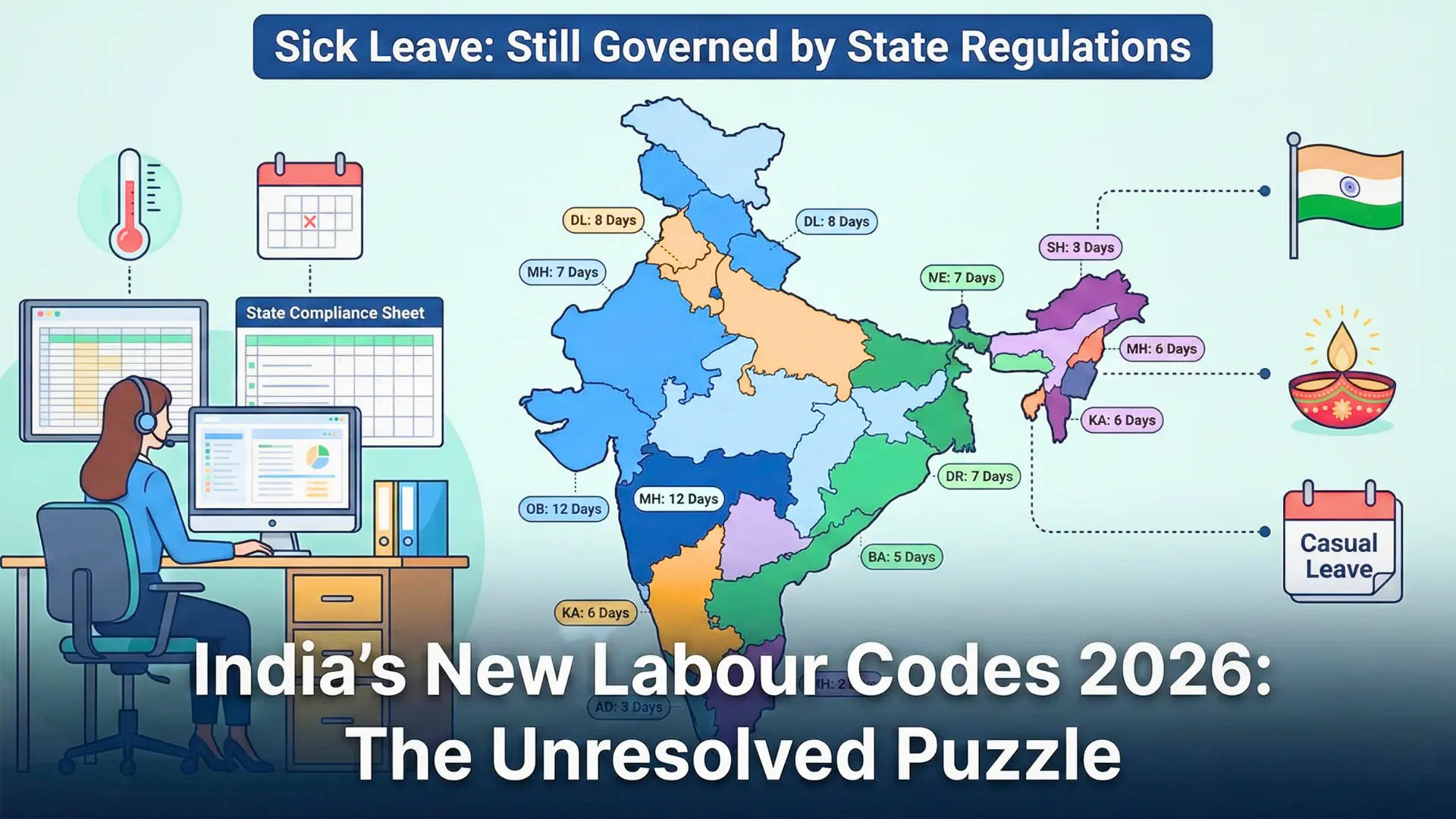
Sick leave remains one of the areas not standardised under the central Codes.
It continues to be governed by state Shops & Establishments Acts until states issue revised rules under the new framework.
What this means for employers:
• Sick leave entitlements may vary by state (usually 6 to 12 days).
• Employees in multi-state organisations may have different sick leave rules depending on their work location.
• HR teams must maintain a state-specific leave compliance sheet to avoid under- or over-provision of leave.
Many companies voluntarily unify sick leave policies across locations, but state rules continue to apply.
Casual Leave and Holidays: No Immediate Central Change
Casual leave is for short, unforeseen absences and, like sick leave, is a state-governed leave type.
Common state variations include:
• 6 days
• 8 days
• 12 days
The new Codes do not change this, allowing states to retain flexibility.
Holiday Rules
The Codes do not modify holiday structures. Employers must still comply with:
• 3 mandatory national holidays (Republic Day, Independence Day, Gandhi Jayanti)
• State-notified festivals and public holidays
Restrictions on requiring employees to work on national holidays remain unchanged, unless double wages or compensatory leave are provided.
Practical Impact for Employers
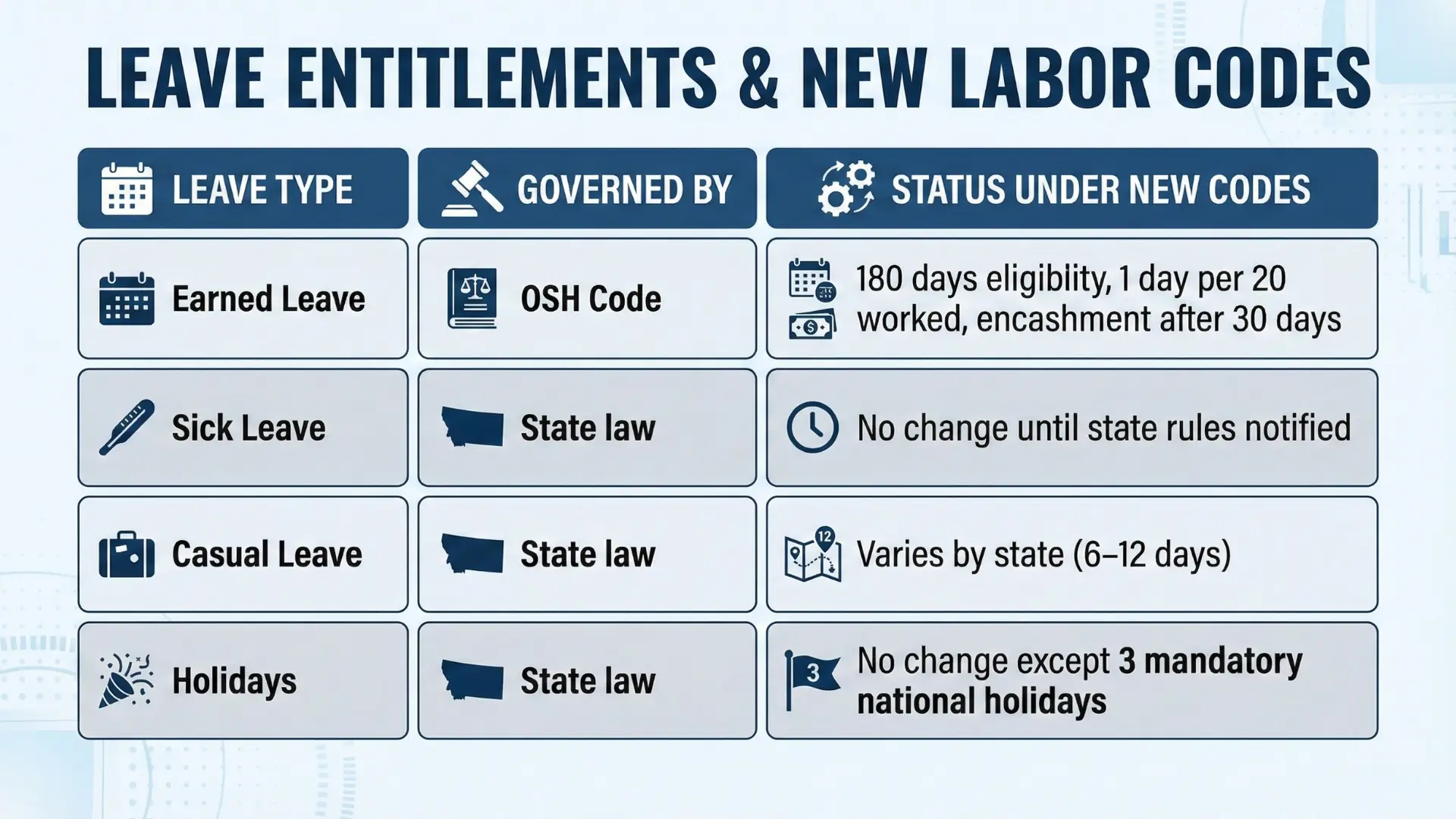
Even though not all leave types are centralised, the new labour codes India 2026 require employers to strengthen HR operations, documentation, and payroll systems.
As the leave rules under new labour codes 2026 move closer to implementation, employers must realign HR policies, leave registers, and compliance systems to meet updated eligibility and documentation expectations.
Employers should focus on:
1. Updating HR Policies
Policies must reflect the 180-day eligibility, accrual rules, and encashment provisions.
Clear documentation helps avoid grievances and ensures audit readiness.
2. Monitoring State Notifications
Until states adopt uniform rules, HR teams must track updates and adjust policies accordingly.
3. Revising Attendance and Leave Management Systems
Systems must automate:
• Eligibility checks
• Accrual calculations
• Encashment triggers
• Record-keeping requirements
4. Compliance With Working Hours and Overtime Provisions
The Codes also introduce flexibility in working hours (such as a 4-day work week) while keeping weekly hours capped at 48. Leave and attendance systems must align with these changes.
5. Strengthening Record-Keeping
Accurate leave registers, working-hour logs, and employee records are essential for compliance and inspections under the OSH Code.
Impact on Employees
From an employee perspective, the new leave structure offers:
• Faster eligibility for annual leave
• More transparent entitlements
• Improved financial benefits through mandatory leave encashment
• Better protections for fixed-term workers
• Greater predictability in multi-state organisations
The long-term goal is to build a fair and uniform leave ecosystem across industries.

Prabhjeet Gill is a seasoned Corporate & HR Legal Advisory Expert with 15+ years of experience in corporate law, employment compliance, blockchain regulations, and cross-border legal structuring. At HR Legal Experts, he specializes in HR policies, employment agreements, POSH compliance, labour law advisory, and regulatory risk management for startups and enterprises. He brings deep expertise in building legally compliant and future-ready business frameworks. His practical, business-first approach helps organizations minimize legal risks while enabling scalable growth.
