In India’s rapidly changing corporate world, an HR handbook is no longer just a set of internal rules but a legal and operational requirement.
For both new businesses hiring their first few employees and established organisations expanding into multiple states, a legally compliant HR handbook in India ensures your workplace policies align with current labour laws, reduce disputes, and promote transparency.
What is an HR handbook and why it matters
An HR handbook, also called an HR manual, is a comprehensive document that outlines a company’s employment rules, procedures, and employee rights and responsibilities.
It serves as a single source of truth for both management and employees, ensuring that everyone operates within a legally sound framework.
In India, where labour laws differ by state and sector, not having a legally compliant HR handbook can expose a company to risks like employee grievances, legal penalties, and reputational damage.
A well-organized HR handbook format (India) ensures consistency in decisions and protects the employer’s interests during disputes.
Legal foundation of HR handbooks in India
Creating an HR handbook isn’t just about internal governance. It aligns your policies with India’s statutory framework.
Employers must ensure compliance with central and state-level labour laws, including:
• Shops and Establishments Acts (state-specific): Defines leave entitlements, working hours, and conditions of service.
• Factories Act, 1948: Applicable to manufacturing units.
• Payment of Wages Act, 1936: Regulates wage disbursement timelines.
• Minimum Wages Act, 1948: Prescribes minimum pay rates.
• Maternity Benefit Act, 1961: Covers maternity leave and benefits.
• Sexual Harassment of Women at Workplace (Prevention, Prohibition and Redressal) Act, 2013 (POSH): Mandates safe and respectful workplaces.
Together, these laws and your company’s internal policies form the backbone of a legally sound HR manual. Compliance is a part of running a responsible, ethical business.
Rights of Contract Workers Under Indian Law
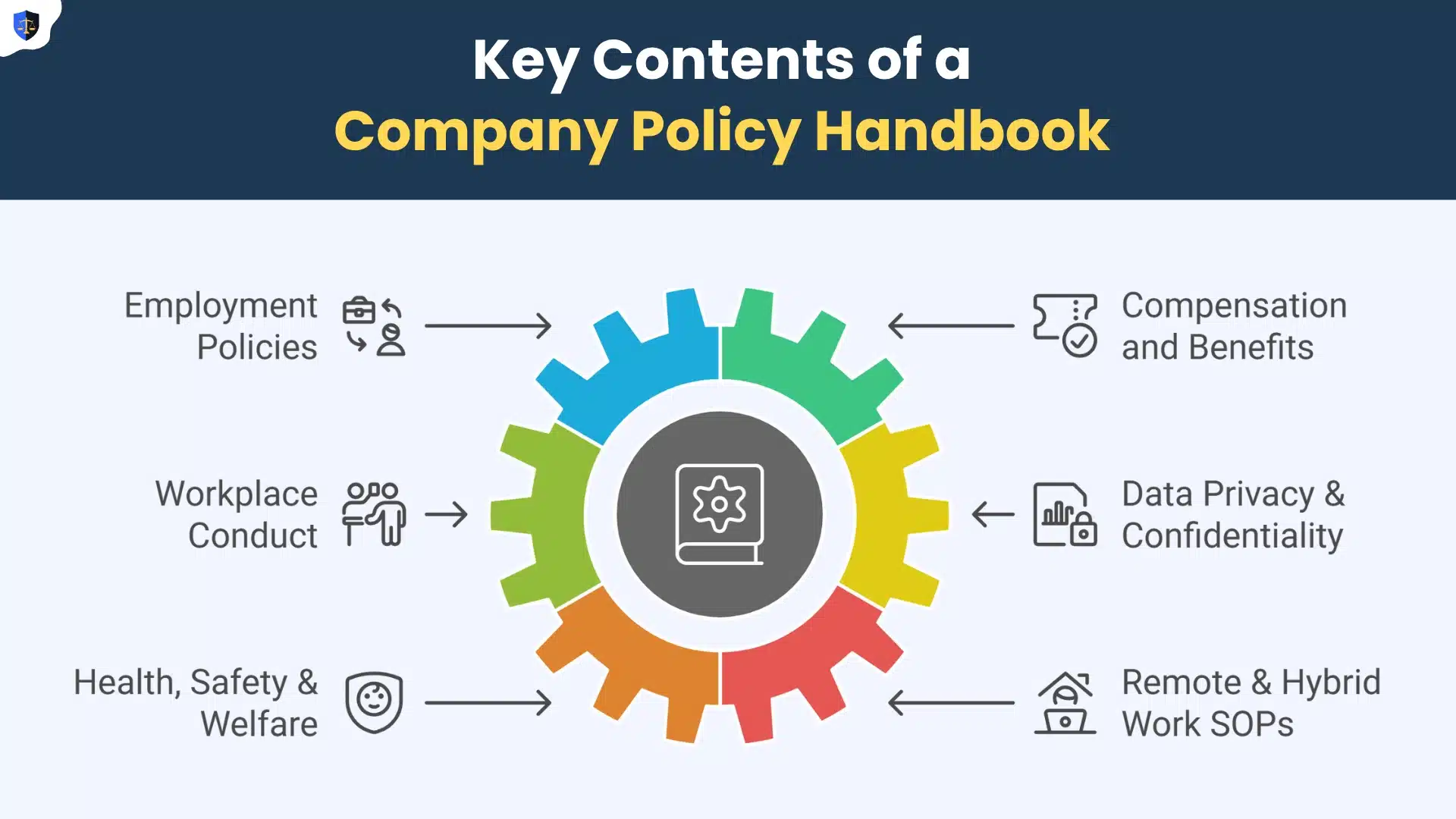
An effective company policy handbook must balance compliance with company culture.
While every organisation’s content varies, certain sections are essential across all industries in India:
• Employment Policies: Recruitment, onboarding, probation, confirmation, and termination.
• Compensation and Benefits: Payroll, bonuses, leave policies, and statutory benefits (PF, ESI, gratuity).
• Workplace Conduct: Code of conduct, anti-harassment policies, disciplinary and grievance mechanisms.
• Data Privacy & Confidentiality: Mandatory under the Digital Personal Data Protection Act, 2023.
• Health, Safety & Welfare: Compliance with state labour and workplace safety regulations.
• Remote & Hybrid Work SOPs: Clear rules on attendance, device usage, and data protection.
Each section should reference the relevant Indian labour laws, making your handbook transparent and enforceable.
HR SOPs: Turning policy into practice
Policies are only effective when they’re implemented consistently. That’s where HR SOPs (Standard Operating Procedures) come in.
For example:
• A leave policy must include an SOP outlining the approval process.
• A POSH policy must define how employees can report and how the committee investigates complaints.
• A payroll SOP must specify authorisation levels and recordkeeping.
Including SOPs within your HR handbook ensures every department follows the same processes, reinforcing compliance and clarity across the organisation.

Benefits of a Legally Compliant HR Manual
A strong HR manual in India offers multiple benefits:
• Minimizes non-compliance risks and legal exposure.
• Clarifies employee rights, obligations, and benefits.
• Promotes fairness and consistency in decision-making.
• Strengthens employer branding as a law-abiding and employee-centric organisation.
• Builds trust among employees, clients, and investors.
Ultimately, a legally compliant HR handbook is a mark of professionalism and good governance.
Building and Maintaining Compliance
Labour laws in India evolve regularly. Hence, an HR handbook should never be static.
Review it annually or whenever new regulations, such as state amendments or data privacy obligations, come into effect.
Partnering with legal experts in Indian labour law helps ensure your handbook remains updated and reflects your operational realities.
This proactive approach saves companies from compliance risks and potential litigation.
Final Thought
A legally compliant HR handbook in India is a long-term asset rather than a legal formality. It safeguards your business, empowers your employees, and nurtures a culture of transparency and compliance.
Whether you’re drafting one from scratch or updating an old version, now is the right time to align your HR practices with India’s labour laws and future-proof your organisation.
FAQs: HR Handbooks in India
HR Handbooks Questions
It should include employment, compensation, conduct, leave, POSH, data privacy, and health & safety policies, all aligned with Indian labour laws.
While not mandated by law, maintaining a legally compliant HR handbook demonstrates adherence to statutory obligations and minimises risk.
Ideally, once a year or when significant legal amendments occur, such as the implementation of the Digital Personal Data Protection Act, 2023.
Multiple acts apply, including the Shops and Establishments Acts, Factories Act, 1948, Payment of Wages Act, POSH Act, and Maternity Benefit Act.
Absolutely. Startups can use it to standardise hiring, define culture, and ensure compliance from day one.

HR Legal Experts is a specialized consulting firm helping businesses stay fully compliant with labour laws and HR policies. With a proven track record of serving 500+ organizations, we deliver customized solutions in POSH compliance, employee handbooks, contracts, and regulatory documentation. Our team combines legal expertise with practical HR insights to ensure risk-free, people-first workplaces.
